Prologue

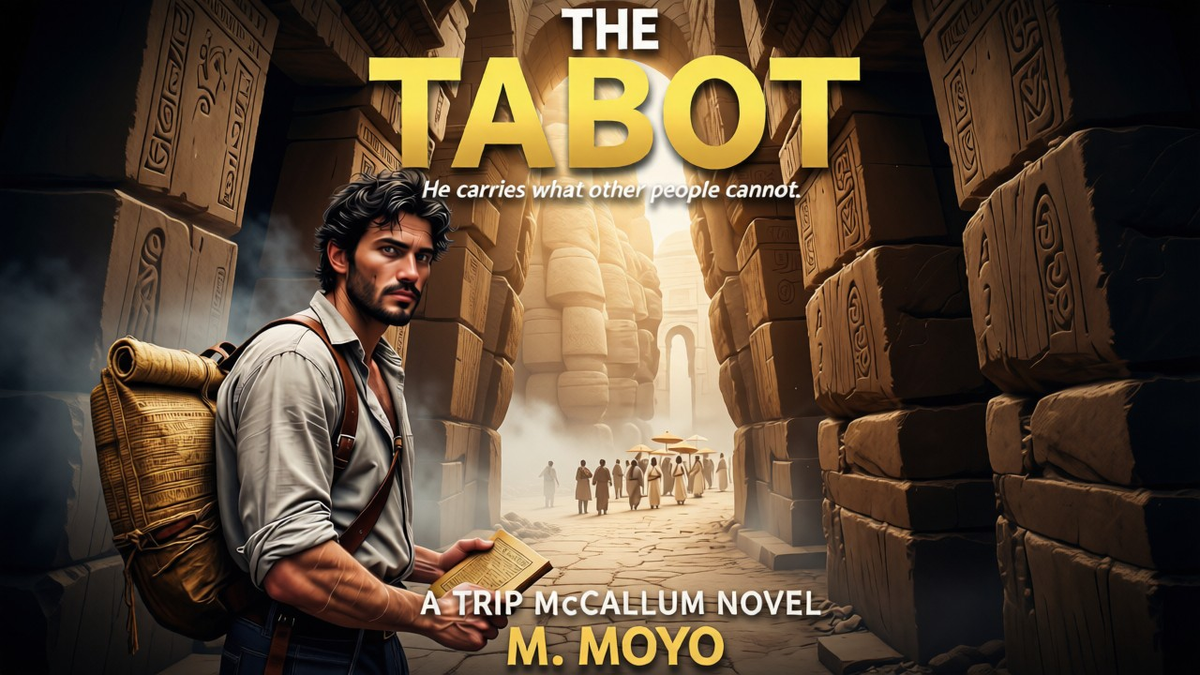
Maqdala, 13 April 1868
The shelling stopped at four in the afternoon, and after that the only sounds were the fires and the donkeys.
Kidane had been in the church since noon. He had not prayed, exactly. He had moved things.
Medhane Alem had four doors and three of them were now on the ground, and the light coming in through the gaps was the wrong color, orange and shifting, so that the painted saints on the west wall looked like they were being lit from underneath. He had carried out the chalice first. Then the censers, which was a mistake, because they were heavy and he was sixty-one and the second trip had cost him eleven minutes he could not afford. Then the manuscripts, four armfuls, stacked in the open under a tarpaulin with a stone on each corner, because there was nowhere else to put them and at least out there he could see the sky.
He had left the tabot for last.
That was the right order and he knew it was the right order, and he had been standing in front of it for a full minute anyway, doing nothing, while the roof beams ticked above him.
It sat on the altar, wrapped, as it had been wrapped since before his father was born: a wooden tablet maybe two feet long, bound in cloth so old that the pattern had gone, tied at both ends with cord that had been retied by hand, over and over, by every priest in the line of priests going back to the beginning. Only a priest touched it. That was the rule. It had been the rule for four hundred years.
This is not an object, he thought. This is a church.
The shelling had started again somewhere off to the north, three guns, spaced, unhurried, the way you'd knock on a door you already owned.
He picked it up.
It was heavier than it looked, which was the first thing he'd been told about it and the first thing he'd told every deacon since, and the weight of it against his chest was familiar the way a name is familiar. He carried it out through the north door, into the smoke, and got eleven feet before he understood that he was not going to make it any further than eleven feet, because there were two hundred people in the compound and all of them had seen him.
They came at him like water finding a slope.
The first was an old woman he did not know, who put both hands flat on the cloth and said something he couldn't hear. Then a boy. Then four men from the same village who had all decided, at the same moment, that the most important thing in the world was to touch it once before it was taken. Kidane stood in the middle of it with the tabot against his chest and let them, because there was no version of this in which he got to keep walking.
"Get back," he said, in Amharic, without any force in it. "Get back, you're all going to—"
Somebody's elbow went into his ear.
He was still standing there four minutes later when the officer came.
The man was young. That was the first thing. Twenty-four, twenty-five, in a scarlet coat that had been made for somebody broader and a helmet he was carrying rather than wearing, and he had a smear of soot across one cheek that he had clearly not noticed. He stopped about eight feet away and looked at the crowd, and then at the thing in Kidane's arms, and his whole face did something that Kidane had seen on the faces of perhaps four Europeans in his life.
He had read about it.
"Sir," the officer said. "Is that the—" and then he stopped, because he didn't have the word, and he said instead, in careful, terrible Amharic, "The holy thing. From the altar."
"Yes," said Kidane.
"Yes," the officer repeated, and then, in English, mostly to himself: "Right."
The crowd had thinned the way crowds do, sideways, without anyone deciding. The two of them stood in the middle of a compound that smelled of burning thatch and gun oil, and the officer took off his helmet and held it against his hip like a man who had been taught to do that in a room.
"You're the priest," he said.
"I am the priest."
"Lieutenant Carew. Bombay Engineers." He said it like an apology, and then, because he seemed to be a person who could not help himself, he added, "I've read Mr Bruce. And the Abbé Rochet. The thing you're holding is — it's in Rochet, it's the—"
"Tabot."
"Tabot." He said it correctly, which almost nothing about the last three days had been. "Thank you. Yes."
Somebody behind them was shouting about a mule. Neither of them turned round.
"Sir," said Carew. "You'll have to give it up."
"I know," said Kidane.
"You do?"
"I've been watching you people for two days." He adjusted the tabot against his chest; his arms were beginning to go. "You take things correctly. That's the worst kind."
Carew laughed, once, shortly, and it was not a laugh of amusement.
Then he did the thing that Kidane thought about for the rest of his life, which was that he put his helmet down, unbuttoned his own greatcoat — grey, good wool, probably the best coat in the province — and took it off, and came forward, and said, "May I?" and waited.
Kidane looked at him for a long moment.
"Hold it from underneath," he said. "Not the ends. The cord is old."
Carew wrapped the tabot in the coat. He did it properly. He did it better than Kidane had done it, and he did it with the specific care of a man who had spent three days watching things get broken and had decided that this one would not be. When he was done he held it out for a second, and Kidane put both hands on the cloth one last time, and then let go.
"It'll be looked after," Carew said. "It goes to the Crown. There's a— there's a process. It's all written down. It's—" He gestured with his free hand, vaguely, at the whole concept of a process. "It's proper, sir. That's the only thing I can promise you."
"Yes," said Kidane. "That is the only thing."
The officer turned to go, and got three steps.
"It will come home," Kidane said.
Carew stopped.
"It will come home," the priest said again, to the young man's back, in English, which he had learned from a missionary and had never once needed until now. "And whoever is holding it when it does will have to give it up."
The officer half-turned. His face was doing something complicated. Behind him the light off the fires came up his coat and made him look, for a moment, like the painted saints on the west wall — lit from underneath, and already gone.
"Give it up to who?" he said.
Kidane wiped his eyes with the flat of his hand, which was not a thing he would normally have done in front of a foreigner.
"To whoever it belongs to," he said. "That's the whole of it. That's the whole thing."
Carew looked at him for four seconds, and then nodded, once, like a man agreeing to something he did not yet understand, and walked away across the compound with a church under his arm.
—∿—
The fires burned until morning.
Kidane slept in the compound because there was nowhere else, and because the church was three walls and a roof and a smell, and because a man who has just handed over a church does not sleep well in a bed. He sat with his back against the well and watched the British camp settle into its own noise, and at some point in the small hours a sergeant came round with a bucket of tea and gave him some without being asked.
At dawn he went back to the church.
The west wall was standing. That was the thing. The painted saints were still there, lit from the front now, in the flat grey light, and they looked exactly like they had looked every morning for as long as he had been alive, which was thirty-four years of mornings in this building and twenty before that in the old one.
He knelt in front of the west wall and said the morning office, and then he went out and started sorting the manuscripts, because there was nothing else to do and because the manuscripts were four armfuls and the tarpaulin had held.
The British were gone by noon.
He watched the column go from the ridge, and from that distance it was just a line of men and mules and a wagon or two, and somewhere in it, in a good coat that no longer belonged to a lieutenant of the Bombay Engineers, was a wooden tablet with a cord on each end and a knot that Kidane had tied himself at half past four the previous afternoon.
He had tied it well. That was something.
He went back down the ridge and started, that afternoon, to write the register. It took him four days and he wrote it in Amharic on paper he had to send a boy to Magdala for, and he wrote the names of everyone who had been in the compound on the thirteenth, and the names of the manuscripts, and the inventory of the chalice and the censers, and at the top of the second page, in his own hand, he wrote:
The tabot of this church was taken on the 13th of April, 1868, by an officer of the British, who wrapped it in his coat and who promised that it would be looked after.
It will come home.
And then he put the register in a tin box under the floor of the north door and lived for another nineteen years, and never once, in nineteen years, did anybody come from the coast with a church under their arm.